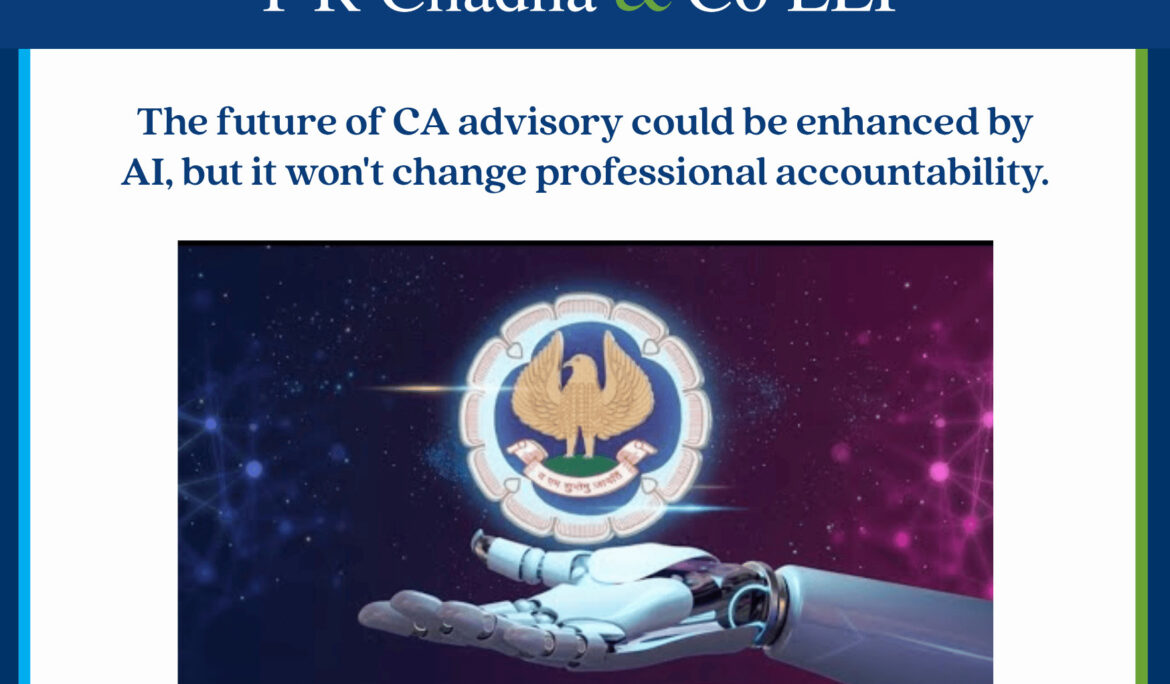
One of the most interesting developments in our profession is that AI consulting is now formally recognised as a management consultancy service for Chartered Accountants.
To me, this isn’t just an expansion of services. It’s an acknowledgement that AI is becoming a part of how businesses make decisions and that clients will increasingly look to trusted professionals for guidance on adopting it responsibly.
But this also raises an important question. If an AI-assisted recommendation leads to an incorrect decision, where does accountability lie? Can we attribute it to the technology, or does professional responsibility continue to rest with the advisor?
In my view, AI should strengthen professional judgement, not replace it. Whether it’s financial reporting, taxation, compliance, or business strategy, clients engage professionals not merely for answers, but for context, interpretation, and informed judgement. As AI becomes a part of our advisory toolkit, our ethical responsibilities become even more significant.
The opportunity is exciting. But as our services evolve, so must our understanding of accountability, governance, and professional ethics. The future of advisory may be AI-enabled, but trust will continue to be built by professionals.