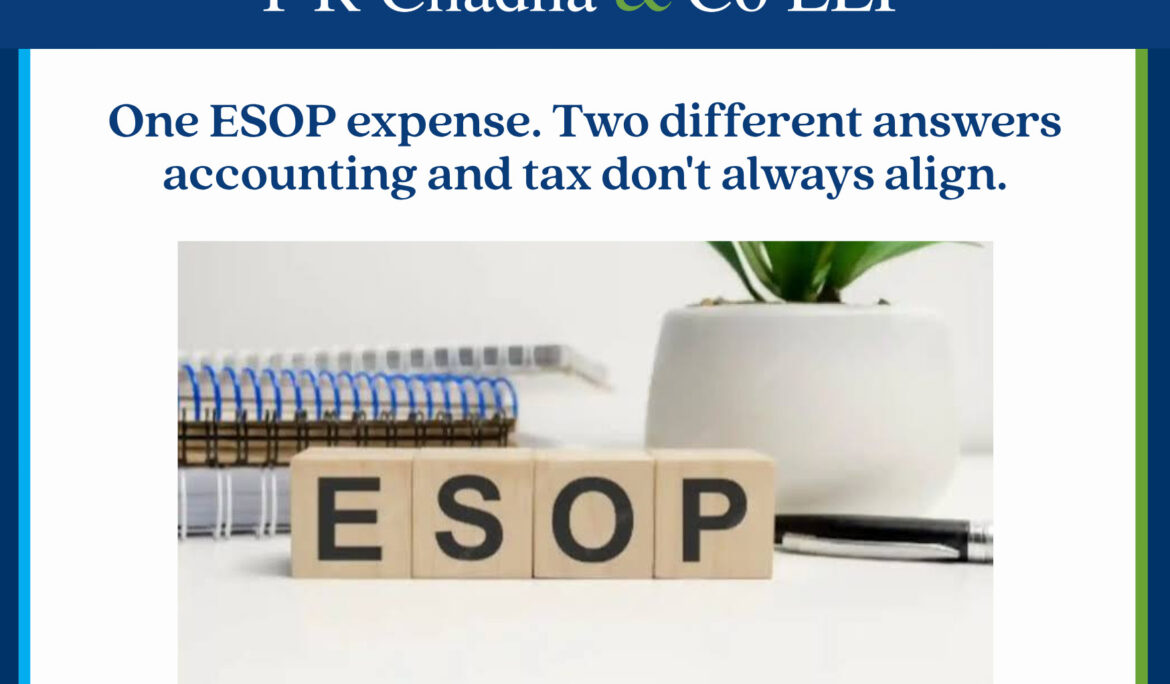
A company records ₹10 crore as an ESOP expense. The financial statements say: employee compensation. The tax return says: disallowance. And suddenly, an accounting decision becomes a tax dispute.
Under Ind AS 102, the fair value of employee stock options is recognised as an expense over the vesting period. Economically, the company has incurred a cost as part of employee compensation.
But tax treatment has been far less straightforward.
One argument from the tax authorities has been that ESOPs involve issuing shares rather than making a conventional cash payment. There is also a separate tax event when the employee is taxed on the perquisite at exercise.
The counterview is equally important.
The company granted the ESOPs as part of employee compensation. If that compensation is incurred for business purposes, why should the absence of a cash payment automatically make it non-deductible?
Indian courts have examined this issue, including the reasoning in cases such as Biocon.
So the accounting treatment may be relatively clear while the tax position remains contested.
For a company recognising ₹10 crore of annual ESOP expense, that difference isn’t academic.
It can affect taxable income, cash taxes and potentially years of litigation.
For management, the lesson is simple: an ESOP plan shouldn’t be designed from an accounting perspective alone.
The accounting treatment, tax position, employee taxation and eventual cash impact need to be considered together—before the options are granted, not after the dispute begins.