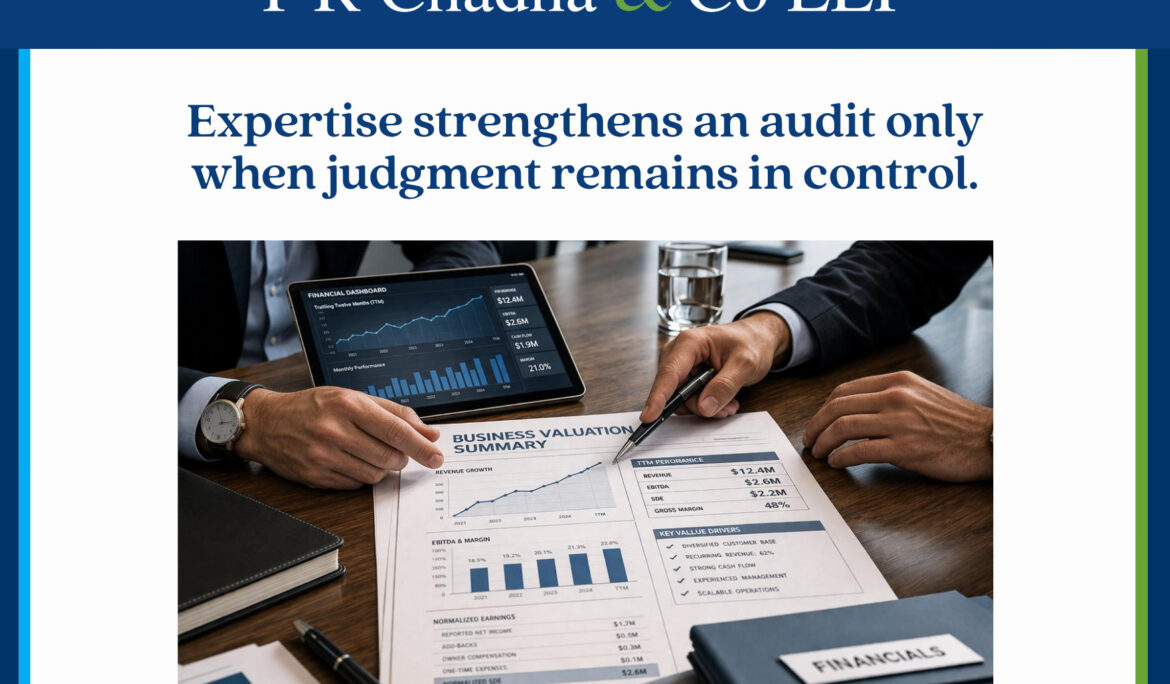
The valuation report arrived. ₹48 crore. The auditor had asked for it because the company held an unquoted investment that couldn’t be valued using a simple market price.
A valuation specialist had done the work. The methodology looked sound. The assumptions were documented.
So the audit should be straightforward now, right? Not necessarily.
Using an expert can strengthen an audit. But an expert’s report doesn’t replace the auditor’s responsibility to understand and challenge the conclusion.
That distinction becomes important when the valuation depends heavily on assumptions: future growth, discount rates, terminal value, comparable companies or expected cash flows.
A specialist may be highly qualified to answer “What is this investment worth?”
The auditor still needs to ask: “Why should we believe this number?”
That’s where over-reliance can become a problem. If the audit team simply accepts the specialist’s conclusion because the expert has stronger technical credentials, the audit may appear more robust while actually becoming less questioning.
The bigger risk isn’t using experts. It’s using them as a substitute for professional judgment.
The best audits I’ve seen use specialists differently: the expert provides the depth; the audit team provides the challenge.
Because ultimately, the valuation expert signs the valuation report. The auditor signs the audit opinion.